Want to insulate a balcony to increase the usable area of your apartment? Take note of the most common mistakes when insulating balconies so that you can do everything well and quickly.
Mistake No. 1. Saving on the thickness of the thermal insulation
Often, because they do not want to lose usable balcony area, people choose insulation of minimal thickness. However, it is very important to take into account not only the thickness but also the type of insulation and its technical characteristics, the most important of which is the thermal conductivity coefficient.
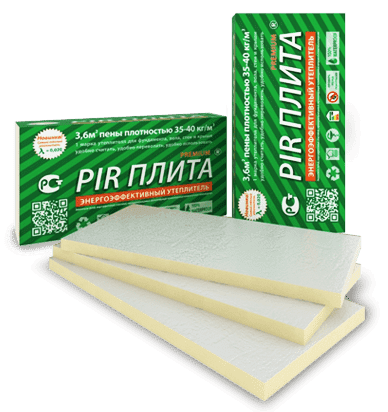
Solution: choose the most efficient thermal insulation materials, whose minimum thickness will be enough to retain heat or cold. Today the most efficient insulation is PIR. PIR Plita is suitable for insulating balconies®with foil or film facings and a thermal conductivity coefficient of 0.020 W/m·K.
Mistake No. 2. Choosing insulation at random
The range of insulation materials is wide, and it is easy to get confused and choose an unsuitable material. And then run into many problems.
The most popular and best-known insulation is mineral wool. It is as fire-safe as possible and resistant to temperature changes. However, this material is quite heavy: the denser and heavier the mineral wool, the better it retains heat or cold. Moreover, mineral wool “eats up” twice as much usable space as more modern insulation materials. And if it was stored incorrectly, which you are unlikely to find out, it may have taken on moisture — this threatens a loss of thermal insulation properties.
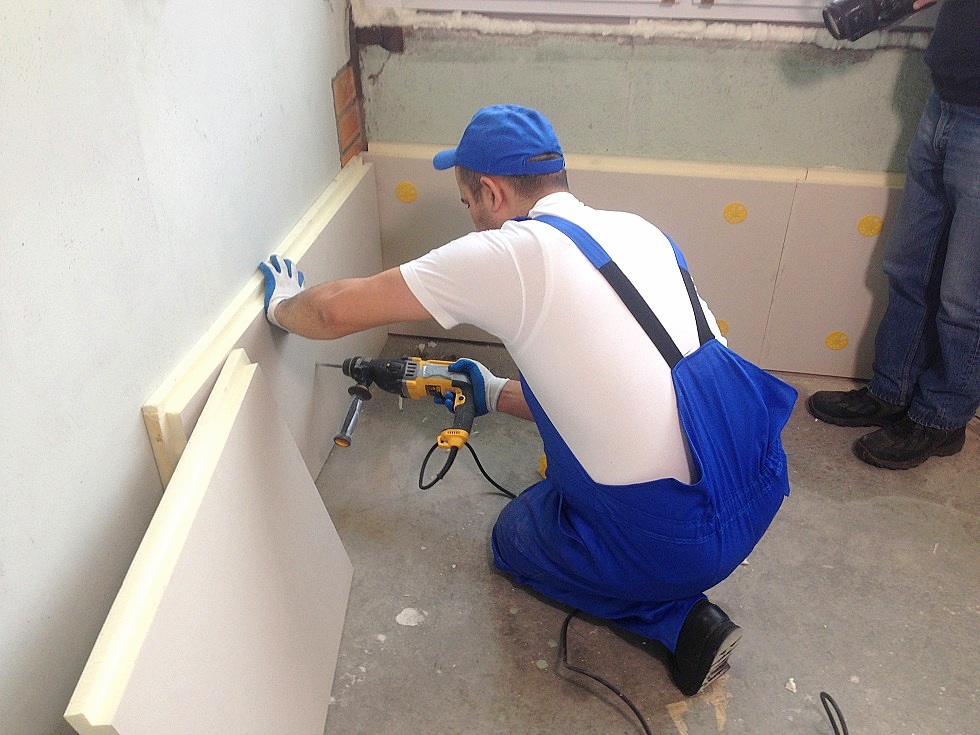
Solution: think through your wishes carefully and take into account the specifics of the room. A balcony needs lightweight, fire- and moisture-resistant, eco-friendly insulation that is easy to install. Take a look at PIR Plita®. Our PIR Plita® has the European CE certificate: it is certified to the European standard for polyisocyanurate foam insulation with flexible facings EN 13165. The material has Class E for reaction to fire, so it does not support combustion, does not attract rodents and is not afraid of water — after all, polyisocyanurate foam structurally consists of closed cells into which water cannot penetrate according to the laws of physics. The insulation is easily cut and installed on adhesive and self-tapping screws, so you will certainly manage.
Advice from ProfHolod: Do not skimp on insulation, because the end result will depend on its quality. PIR is more expensive than other insulation materials, but its technical characteristics are higher, which means it insulates better.
Mistake No. 3. Neglecting the vapor barrier
This stage is very important. Without a vapor barrier, walls with mineral wool insulation may become damp, and mold and fungus will appear.
Solution: Use special materials for the vapor barrier or PIR Plita® with foil facings: the foil will serve as the vapor barrier, and you will not have to spend money on additional materials.
Mistake No. 4. Saving on foaming the joints
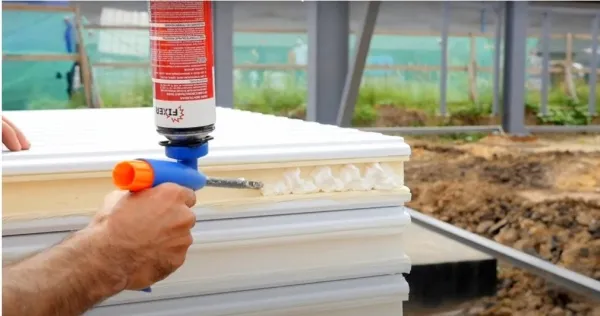
Rigid insulation materials such as PIR Plita®are easily installed on any flat surfaces. However, the joints, even L-edges, must be foamed to guarantee energy efficiency. Mounting foams, as a rule, are also made of polyurethane foam, so insulation can be entrusted to them.
Solution: always treat the joints of the insulation.
Mistake No. 5. Insulating only the outer walls
The wall adjoining the neighboring balconies should also be insulated. Because you are unlikely to know what insulation was used on that side — which means that in winter it may let the cold through too.
Solution: do not skimp, lay thermal insulation on all the walls, including the adjoining one. The insulation layer here can be much thinner than on the outer side of the balcony. A thin PIR Plita® is perfectly suited for this task — it will not take up much space and will protect against the cold.
Mistake No. 6. Cheap windows
Did you keep the developer’s glazing or are you going to buy light, inexpensive windows? You risk getting a drafty and cold balcony.
Please note: the larger the windows, the lighter and more spacious the room looks, but the faster it cools down.
When choosing windows, look at the profile material, the number of chambers in the double-glazed unit and the types of double-glazed units. For example, there are energy-saving glasses on sale with a multilayer metal-based coating, including silver, that retain standard transparency. Such coatings effectively reflect heat towards where it is most concentrated: in winter — into the apartment, in summer — outside. An aluminum profile will not provide a high level of thermal insulation, so it is used mainly for cold glazing.
Also do not forget that energy-efficient window structures are heavy. If you are insulating a balcony rather than a loggia, it must be strong enough to withstand the additional load.
Solution: turn to professionals who will select windows based on the type of your balcony or loggia, the direction the windows face and the floor
We hope your new insulated balcony will become a great place to relax or work!